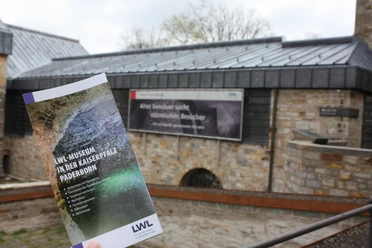
From a mysterious first mention in 775 to a duchy to a kingdom to a Prussian province to the state of Westphalia. Westphalia has had many faces in its history. In Paderborn's Imperial Palace, the public can stroll through the 1250-year history of Westphalia at one of Charlemagne's bases.
On around 1,000 m², the diverse development of the region and its people can be experienced through archaeological finds, historical manuscripts and paintings. They tell stories of tradition, identity and change.
Topics of the public tours:
Charlemagne's Palatinate (for adults and young people aged 14 and over)
In the Middle Ages, kings traveled from place to place to administer the empire, administer justice or meet with advisors and envoys. A network of bases - the palaces - served as temporary accommodation for the rulers and their entourage. A tour of the exhibition and the Carolingian palace brings the early medieval history of this place back to life.
Europe as a guest in the palace (for adults and young people aged 14 and over)
Traditions, exchange and movement characterize our everyday lives. It was no different 1,200 years ago: "Europe" was networked - not least through the bases at which Charlemagne, the "Father of Europe", received emperors, bishops and scholars from all over the world. But what did this mean for Westphalia and Paderborn in Charlemagne's France? How did the people deal with the influences? And how has all this shaped our cultural heritage to this day? The tour shows how people dealt creatively with their own and foreign influences even back then.
One hand washes the other (for adults and children aged 8 and over)
Health was very important in the Middle Ages. Diseases spread rapidly, especially in the newly developing cities. Municipal regulations on waste disposal attempted to get the waste problem under control. Did it really stink "to high heaven" in the streets of Paderborn? How did people protect themselves from dirt and infection? What did it mean if you could no longer work for health reasons? The tour gets to the bottom of this with all the senses.
There is (no) herb grown against it (for adults and children aged 8 and over)
Mallows, carrots and lemon balm - Charlemagne determined what should grow in the gardens of palaces and manors. Whether spicy kitchen herbs or bitter medicines - the plants in the raised beds in front of the museum reveal their fragrant secrets. The tour also provides a cultural background to royal receptions and courtly dining.
The theme of the current tour can be found on the museum's homepage.
Duration of the tour: approx. 1 hour